



An e-commerce business loses money despite rising sales when hidden costs marketplace fees, logistics, returns, advertising, and tax deductions consume revenue that never appears on the sales dashboard. Most online sellers retain only 10–20% of revenue as net profit. Identifying where money leaks is the first step to keeping more of it.
Your orders are coming in and revenue is climbing yet the bank balance tells a different story. This disconnect between strong sales and weak profits is one of the most common frustrations for online sellers. It is rarely one big mistake. It is an accumulation of overlooked costs and financial blind spots that compound with every order.
This guide explains the most common causes of the profit gap, shows how to identify hidden costs specific to the Indian e-commerce accounting, and provides practical strategies for turning growing sales into real, sustainable profit.
The Real Reason Most E-Commerce Businesses Aren’t as Profitable as They Think
They are counting the wrong number most of the time. The revenue feels like success because it is something tangible, immediate, and worthy of celebration. But revenue and profit are two separate things, and equating them is where all the trouble starts.
Revenue ≠ Profit – The Disconnect Nobody Discusses
If you sell a product for ₹2,000 on an Indian marketplace, very little of that actually reaches your bank account. A typical deduction stack looks like this:
| Deduction | Approximate cost |
| Cost of goods (incl. freight, duties, packaging) | ₹800–1,000 |
| Marketplace commission (8–40% by category) | ₹160–800 |
| Logistics and fulfilment | ₹50–150 |
| Payment gateway fee | ₹20–40 |
| TCS deducted by marketplace (1% or 0.5% of net sales) | ₹20 |
| Advertising spends (15–30% ACoS is common) | ₹100–300 |
| Returns and refund processing | ₹40–150 |
| What you actually keep | ₹200–400 |
A well-run Indian e-commerce business retains 10–20% of revenue as net profit. A poorly managed one often keeps nothing or operates at a loss without realising it because revenue figures keep rising.
The metric that matters more than revenue is contribution margin: revenue minus all variable costs (COGS, fees, shipping, advertising). If your contribution margin is negative, selling more makes your losses worse, not better.
The Hidden Costs That Compound Over Time
Some expenses are easy to identify. Some others are quietly nibbling away at your profit margins every month: fees for warehousing goods that move slowly, transaction costs that keep rising along with the number of transactions, subscription services you no longer use, and free return shipping costs you incur but never account for. In isolation, each seems too insignificant to make a difference.
5 Places Your E-Commerce Business Is Losing Money Right Now
1. Unreconciled Returns and Refunds
Returns are part and parcel of selling online, but the effect of unresolved returns is a quiet drain on profits. Every time a customer makes a return to your business, the refund issued is at face value minus the costs associated with sending the product back, which include the initial shipping cost, the transaction cost, the cost of handling the return, as well as possible restock charges or damages. Without proper e-commerce accounting, these costs can easily go unnoticed and turn the profit into a loss.
2. Poor Cash Flow Timing – the Gap Between Paying and Getting Paid
Even a successful e-commerce business may end up short on cash. This is due to the matter of time. Your suppliers, marketing channels, and logistics companies all get paid long before any marketplace money comes into your bank account. That’s e-commerce cash flow management problem in itself – it’s the period where you’ve paid money out, but haven’t received it back yet.
This problem will arise in this period, when despite high sales figures, you are unable to order more popular products or spend more money on advertising. E-commerce cash flow management in the field of e-commerce business involves planning for this period in advance.
3. Ad Spend Without Profit Attribution
Ad spend should be noted that marketing can become the biggest controlled expense of an online store, but its performance cannot be estimated just by income and ROAS. In fact, even having a high ROAS, a campaign will not bring any profit if you consider the cost of goods, fees, delivery, and possible returns. If you cannot connect marketing expenses with profit per order, there is a great danger of increasing inefficient campaigns.
4. Inventory That’s Costing You More Than It’s Earning
Inventories represent money left on a shelf. Overstoring locks away money that might be utilized somewhere else in addition to generating storage costs, while shortages of best-sellers mean lost sales right to your competition. The truth is that many merchants have an inaccurate perception of the real cost of goods, since they forget about shipping, duties, and packaging costs.
5. Accounting That’s Always Playing Catch-Up
With accounting that occurs weeks or months after the event, all decisions will be based on outdated information. Post facto e-commerce business accounting tells us about things that happened before; however, it does not give us a chance to act upon them. When the figures have been balanced, it may already be too late to rectify the problem.
What Good E-Commerce Cash Flow Management Actually Looks Like?
Effective e-commerce cash flow management must be done consistently and in near real time:
- Reconcile payouts weekly: match every settlement against sales, TCS deductions, return adjustments, and fees.
- Track contribution margin by SKU: know which products are profitable after all variable costs.
- Build a 30–90-day cash forecast: model payout delays, supplier terms, and planned inventory orders together.
- Claim GST ITC monthly: including TCS credits from GSTR-8 filings that Amazon and Flipkart submit on your behalf.
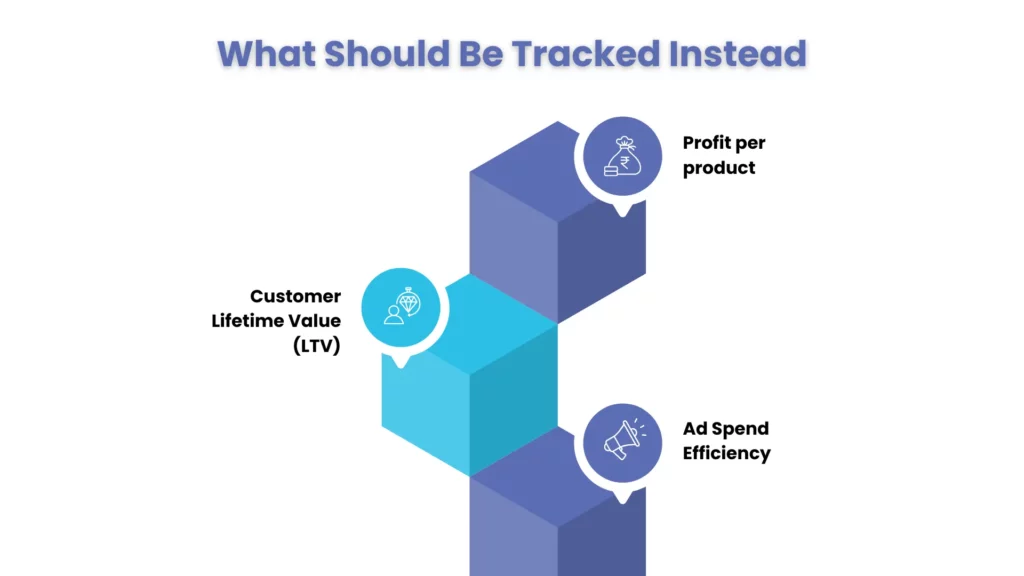
- Profit per product, rather than total revenue: Focus on profit per product, not just total sales, to identify true profitability and make smarter business decisions.
- Customer Lifetime Value (LTV): Measure the total revenue a customer brings over their relationship with your business to identify and prioritize high-value customers.
- Ad Spend Efficiency: Ensure every marketing dollar drives growth by tracking returns on ad spend and optimizing campaigns for maximum impact.
When to Stop Managing This In-House
A spreadsheet works in the early stages. As the e-commerce business expands across multiple channels and a D2C site alongside Amazon, Flipkart, and Meesho the reconciliation workload grows faster than any generalist can handle accurately. Key signals that it is time for specialists:
Marketplace payout deductions cannot be fully explained
- GST filings are consistently late or missing input tax credits
- Accounts are finalised weeks after the period ends
- Tax preparation disrupts normal operations every quarter
Outsourcing to a firm that understands multi-channel e-commerce accounting GST reconciliation, TCS recovery, and per-SKU margin analysis typically costs ₹8,000–25,000 per month, almost always recovered through better ITC claims and more accurate decisions.
Building a Profitable E-Commerce Business
The successful operation of an online shop is based on visibility, not conjecture. It is not the shops that attract the most customers that succeed but the ones that know their margins well, pay attention to the time, and base all decisions on financial information as opposed to using it at the end of the year.
Profitable growth is based on such discipline. With careful monitoring of expenses and trends in income, online store profitability operators will be able to make decisions that transform activity into profit.
Stop guessing. Start profiting.
Corient helps Indian e-commerce sellers turn rising sales into real profit — GST, cash flow, and multi-channel accounting sorted.
People Also Ask:
Why is my e-commerce business profitable on paper but short on cash?
This is generally an indication that there is a timing problem rather than a real profitability problem. For example, you may be paying your suppliers or advertising platform before money starts flowing into your market. Managing this will involve short-term forecasting and effective working capital management.
How much profit should an e-commerce business actually keep?
Depending on the business type or industry, there can be different profit margins; however, for most successful online retail stores, they usually keep around 10 to 20 percent of their revenues as their net profit. In case if you are not getting the above-stated profit margins, there are some probable causes behind it.
What is the difference between revenue and profit in e-commerce accounting?
Revenue is the total amount that you make from selling items in your store, whereas profit is the figure left after taking away the cost of the items sold, along with all other charges such as those for the online market place, shipping, advertising, returns, and so forth.
How do returns affect online store profitability?
While returns lower your sales, they do not necessarily result in the recovery of the costs associated with the sale. Your company will still incur costs such as transportation and processing, which should be recorded in your accounts. Tracking returns allows you to have an accurate picture of how profitable your store is.
When should I outsource my e-commerce accounting?
Outsourcing is the way forward if your transaction volumes are spread across many different channels, if you are constantly lagging behind with your accounting or need financial information that is relevant but difficult to extract. By hiring an outside firm specializing in e-commerce accounting, you gain access to reliable data without having to manage finances yourself.
Can better E-commerce cash flow management really increase profit?
E-commerce cash flow management does not result in any extra income but acts like an insurance plan for your current income. It enables you to prevent shortages, avoid borrowing money at critical times, and make good decisions. These factors help eliminate stress and assure that you retain more of your income within your business rather than losing it elsewhere.
Conclusion:
E-commerce business cannot simply thrive on sales alone but should focus more on profits that can be generated from the sales made. However, in cases where there are difficulties in ensuring that the online stores make some profit out of their sales, it is not often caused by one problem alone but many others.
With Corient Business Solutions today to get the best services in accounting and financial management for profitable e-commerce business.